
Ms Krutzki, what does the SightCity trade fair mean to you personally?
In the eight years in which I have been part of the organisational team, SightCity has become very dear to our hearts. We have experienced highs and lows together as a team, learned a great deal and evolved in the process. My personal background plays a key role here. When he returned from the war, my grandfather only had one functioning eye. In later years, he suffered a stroke that almost robbed him of his sight completely. I can still remember being very angry as a young woman at the way society treated visually impaired people.
I work in the marketing department of a medical aid manufacturer that is a co-shareholder in SightCity. In 2023, after a hiatus due to the coronavirus pandemic, I also took over as Managing Director of SightCity. The trade fair used to be held in the Sheraton Hotel at Frankfurt Airport. Since 2023, we have found a new home at Kap Europa – one that opens up whole new opportunities for us.
What has changed since moving to Kap Europa?
The event is much more professional now. Essentially, the trade fair used to be just a collection of tables and chairs for the exhibitors. Today, there is a clear structure, a hybrid format with around 150 exhibitors from 25 countries and over 130 presentations. As well as this, we have our own streaming channel: SightCity TV. In 2023, we also celebrated our 20th anniversary. Over the years, we have increasingly digitalised our trade fair, expanding our programme and improving the accessibility of the platform. SightCity is now a hybrid trade fair and is growing in all respects.
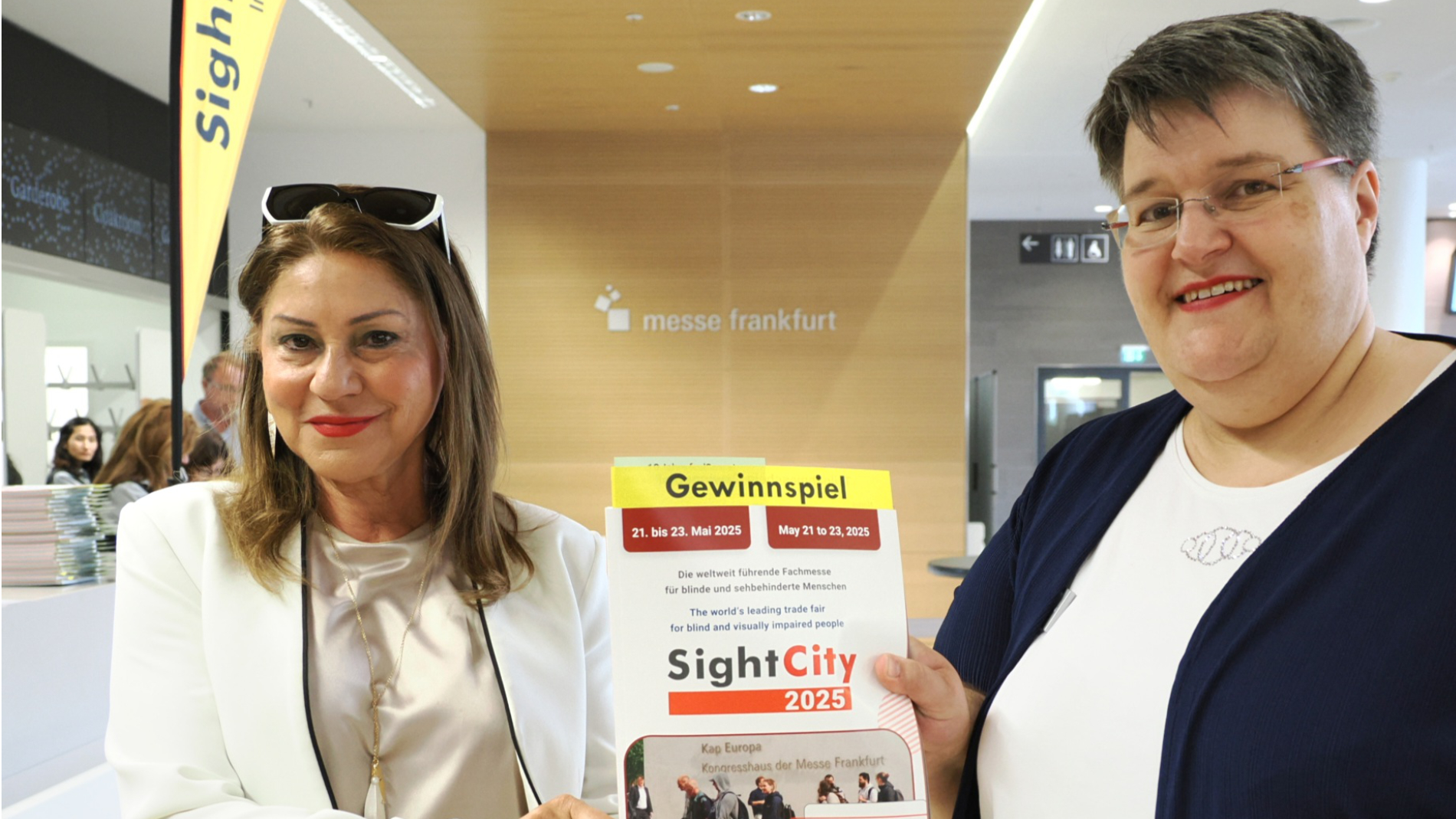
SightCity Managing Director Dagmar Krutzki (right) with Frankfurt mayor Dr Nargess Eskandari-Grünberg at the opening of the SightCity trade fair at Kap Europa.
In your view, what sets Frankfurt apart as a trade fair location?
When SightCity was founded 20 years ago, the Rehacare trade fair in Düsseldorf was already established. A very good trade fair, no question about it. However, the focus there is more on visible disabilities, such as mobility impairments. In many cases, visually impaired people are not directly seen as such – and are often overlooked as well. Our shareholders wanted to create a trade fair that was geared towards these exact needs. As a centrally located city with excellent transport connections, Frankfurt was the ideal choice.
How do you ensure that blind and visually impaired guests are able to navigate the trade fair easily as well.
Our guide service is an integral part of SightCity. Trained trade fair guides collect visitors at Frankfurt Central Station every 15 minutes and take them to Kap Europa. They also accompany them on their way back so that no one can lose their way. During the trade fair, visitors can make use of our ‘rent-a-guide’ service and have their own individual guide who is well acquainted with the exhibition areas and can help them to make the most of their trade fair visit.
Has there been any particularly moving moment during the trade fair that has remained with you?
Yes, lots of them. But one experience in particular has stuck with me: two years ago, an Egyptian-German couple visited the trade fair. The husband was blind and was completely taken aback by the sheer diversity of products on offer. He broke down in tears on the escalator because he could hardly believe that there was an event that was tailored so precisely to his needs. That was an extremely emotional moment that touched us all.
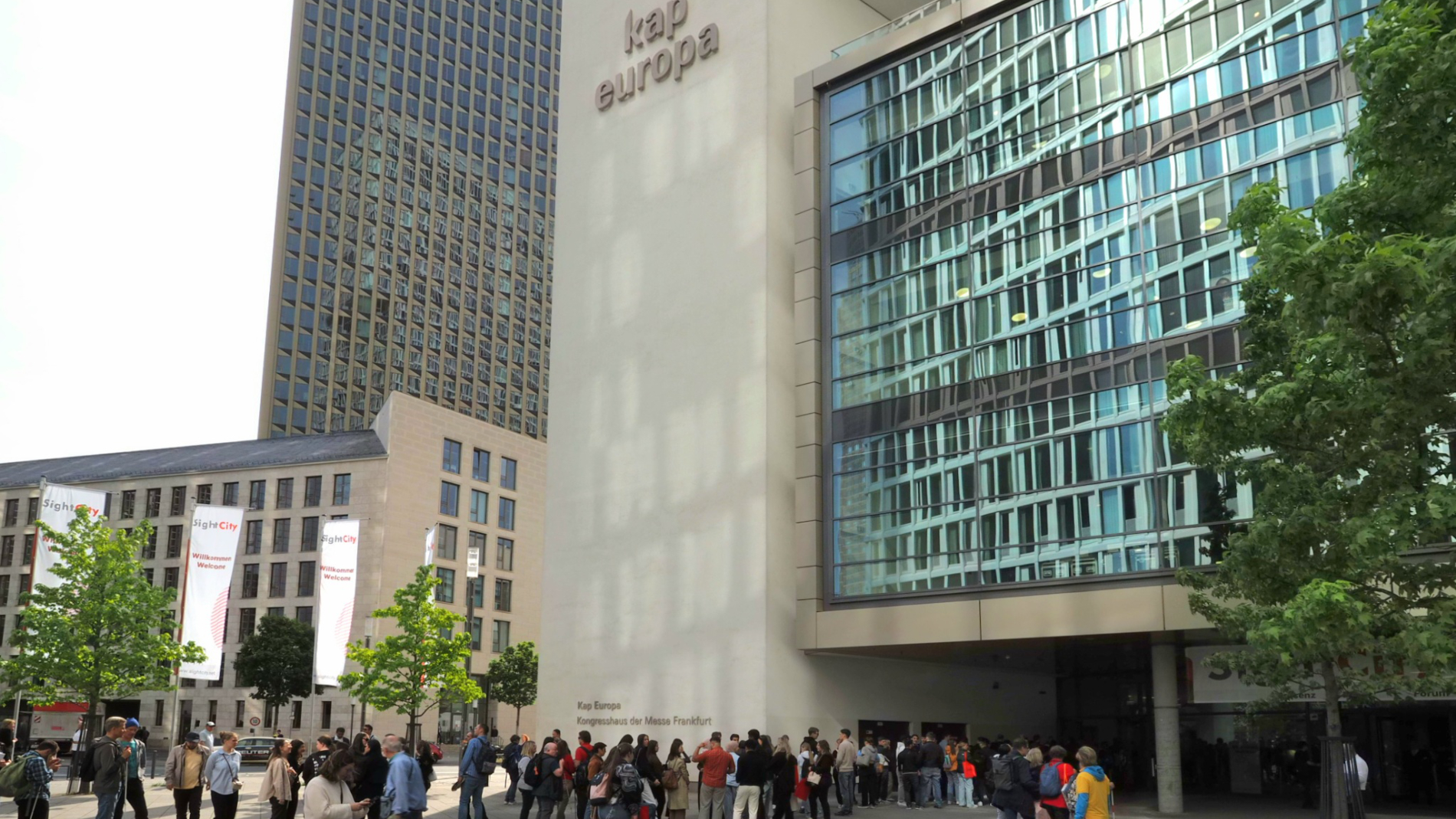
Visitors in front of Kap Europa at the entrance to the SightCity trade fair, which was a resounding success.
What topics and innovations are currently under the spotlight?
Our focus is very much on blind and visually impaired people, but we are expanding this more and more to include other areas. For example, we work together with the German Deafblind Association and, thanks to funding from German charitable organisation Aktion Mensch, we now have sign language interpreters for presentations for the very first time. As regards technology, we cover the whole spectrum from analogue aids like long canes and tactile maps to digital solutions with AI. Many people associate the term ‘visual aids’ solely with glasses, but the range of needs is far more complex. A new addition to this year’s event is a workshop stage on inclusive gaming and a special mobility area.
How has social awareness of barrier-free access changed?
Quite a lot of progress has been made. A prime example is the German Accessibility Improvement Act (BFSG): from 28 June 2025 on, the websites of many companies and public authorities will be required to be entirely barrier-free. This is an issue that has long been overlooked, including by many web agencies. It has a far higher profile now. This can also be seen from the rise in demand for our workshops and training sessions.
How would you like to see SightCity develop in the future?
Many people would probably like to see further growth. What I would like most of all is for us to stay in our new home at Kap Europa. The diversity that you find here is truly unique. Needless to say, we are growing as well – but at a healthy rate. One important thing to note is that, even though SightCity is a limited liability company (GmbH), we operate like a charity organisation. We are not aiming for profit but rather to establish a strong platform for interaction, dialogue and inclusion.
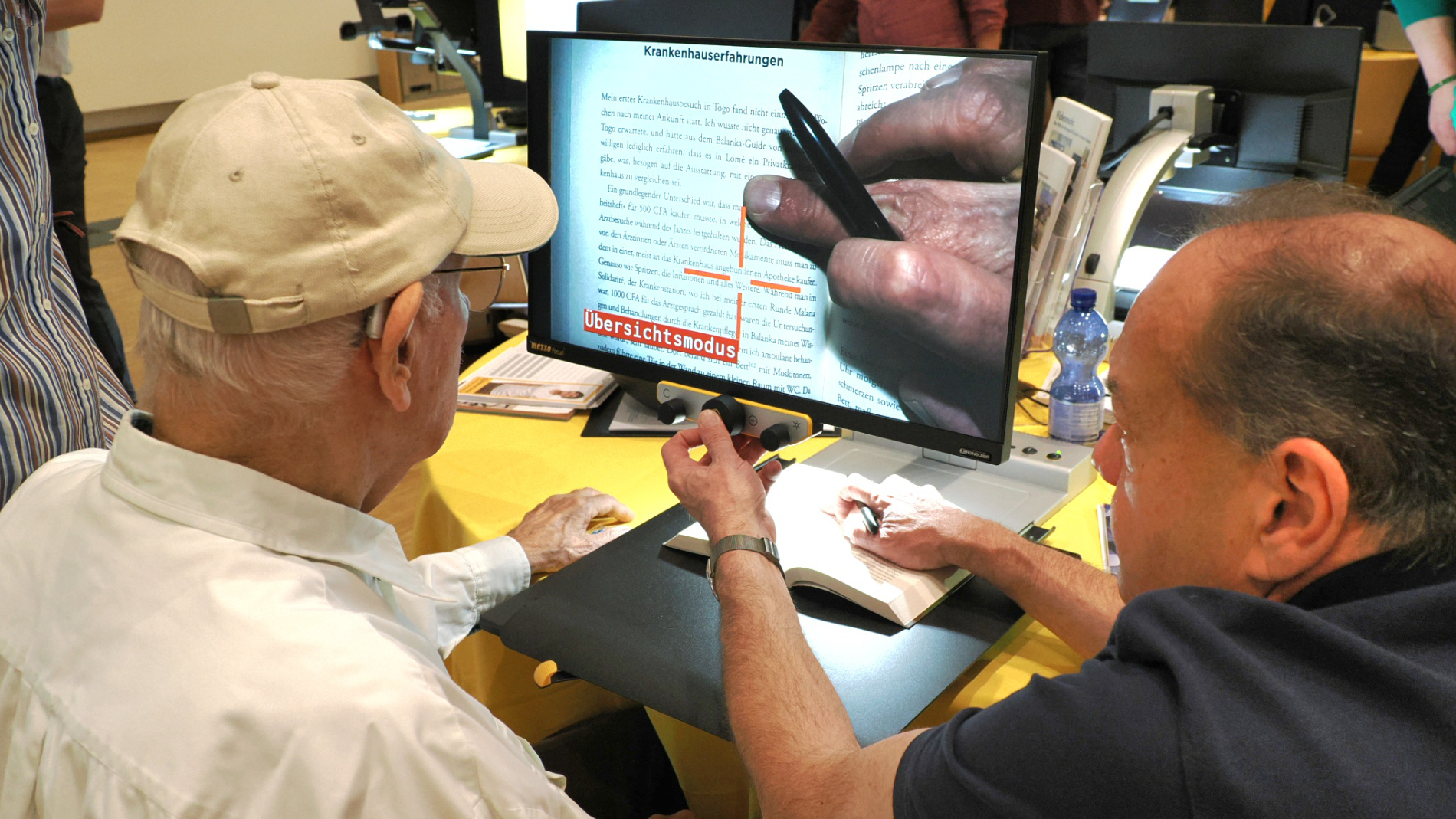
Many different types of aids can be tried out at the trade fair.